
Blog
Custom Software vs Ready-Made Software: Which Is Better for Your Business?

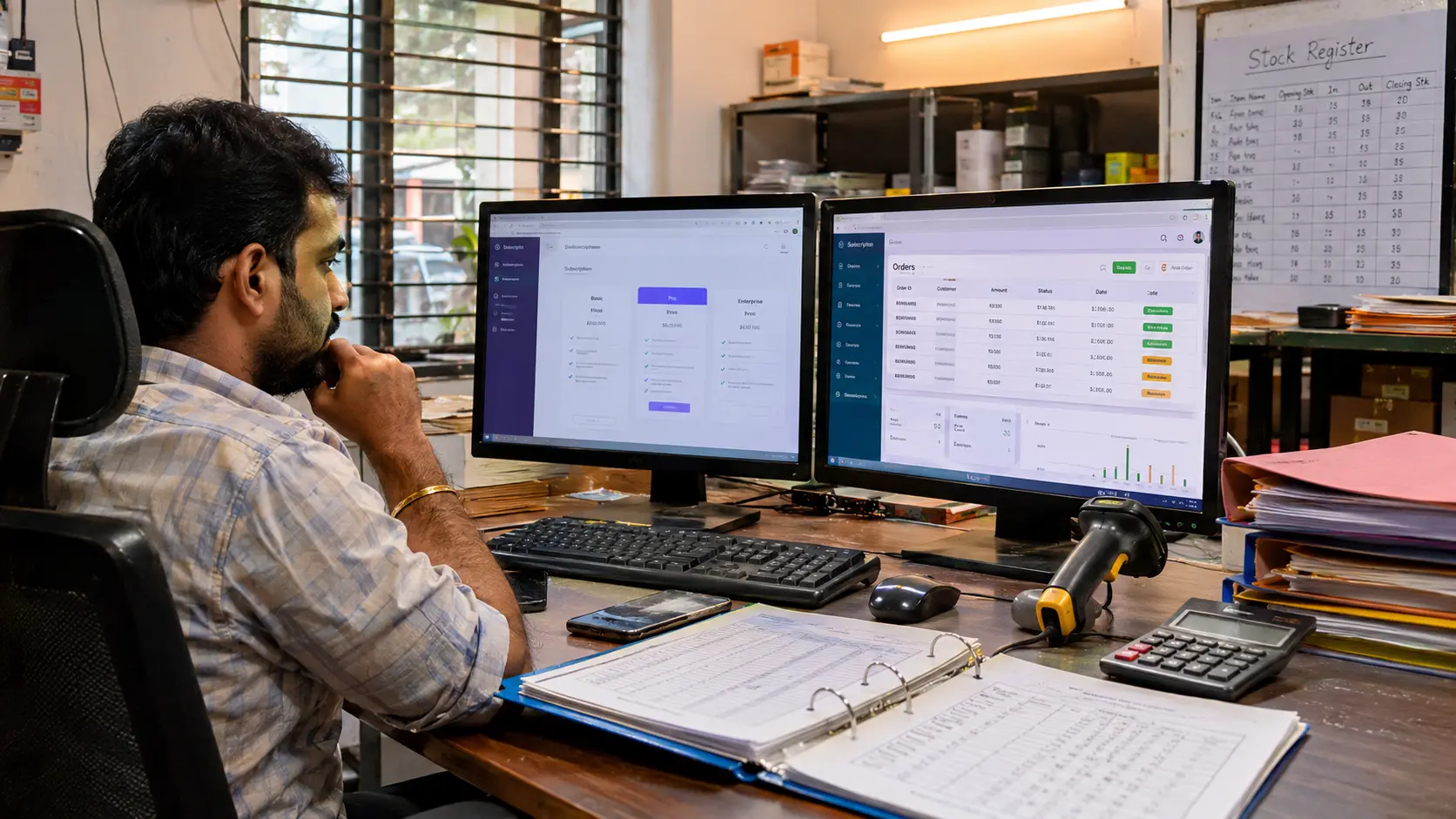
The debate around custom software vs ready made software usually starts the same way. A business grows, the spreadsheets get heavy, or a subscription tool handles most of what the team needs but not the part that actually matters. Someone asks whether it is time to build something of your own, or whether switching to a better packaged product would be enough.
There is no universal winner. Ready made software is faster to start and often cheaper on day one. Custom software costs more at the beginning, but it can fit your process exactly and stays under your control. The right answer depends on how unusual your workflow is, how fast you expect to grow, how sensitive your data is, and how much change you can handle in the next few months.
This guide walks through the real differences, the risks on both sides, and a simple way to decide. If you are already leaning towards building, you can also look at our software development services to see the kind of systems we build.
What Ready Made Software Really Means
Ready made software, also called off the shelf or packaged software, is a product built for many businesses at once. You sign up, configure a few settings, and start using it. Accounting tools, standard CRMs, appointment schedulers and basic billing apps all fall into this group.
The strength of ready made software is that the product already exists. You can see it working before you pay, read reviews from other users, and start within days. The vendor handles hosting, updates and bug fixes, so your team does not need technical staff to keep it running.
The limitation is also built into the idea. A product designed for thousands of customers has to stay general. If your business follows a standard process, that is perfectly fine. If your process has its own steps, approvals, pricing rules or reports, you will start adapting your work to the software instead of the other way around.
What Custom Software Really Means
Custom software is built for one business, around its workflow. A developer or software development company studies how your team works, lists the problems to solve, and builds a system that matches. You decide the features, the user roles, the reports and the integrations.
On its software development page, Branx lists several kinds of systems it builds around specific industries:
- Hospital management software for patient records, appointments, billing and pharmacy
- School and coaching ERP for admissions, attendance, exams and fee management
- Inventory and billing software with stock tracking, barcode support and GST reporting
- CRM solutions for lead pipelines, sales activity and customer communication
- Hotel management software for reservations, room allocation and guest operations
- Transport and logistics software for fleet, routes and shipment tracking
Each of these could also be bought as a packaged product. The reason people still build them is control. When the software belongs to you, a change in your process becomes a development task, not a feature request sitting in a vendor queue.
Cost: Day One Price Versus the Full Picture
Cost is where most decisions begin, and where most comparisons go wrong.
Ready made software usually has a low entry cost. You pay a subscription, often per user or per month, and you can start small. The catch is that the cost keeps repeating. As your team grows, you add users. As your needs grow, you move to a higher plan. Add ons, integrations and extra storage can quietly raise the bill.
Custom software asks for a larger investment at the start. You are paying for planning, design, development and testing. After launch, you still need budget for hosting, maintenance and future improvements. What you gain is ownership of a system that does not charge you per seat in the same way, and that you can change without asking permission.
Neither option is automatically cheaper. A five person business with a simple process will almost always spend less on a packaged tool. A business with fifty users, a complicated workflow and three paid add ons to patch gaps may find that a custom system makes more financial sense over several years. The honest way to compare is to calculate the total cost over three to five years for both routes, including the time your staff loses to workarounds.
Flexibility and Fit
This is the strongest argument for custom software development. Every business has small rules that no general product anticipates. Maybe your discount depends on the customer category and order size together. Maybe your invoices follow a format that your accountant insists on. Maybe a field team needs to approve a job from a phone before the office can bill it.
With ready made software, these rules become manual steps, spreadsheets on the side, or workarounds that only one employee understands. That person leaves, and the workaround leaves with them.
With custom software, the rule is written into the system once. The software follows your process, and new staff learn one clear way of working.
That said, flexibility has a price in decisions. Someone has to define exactly what the software should do. A business that has not yet settled its own process may be better off using a packaged tool first, learning what it needs, and building later.
Speed: How Soon Can You Start
Ready made software wins on speed without much argument. If you need a billing tool next week, a packaged product can usually get you there. Training material, tutorials and community answers already exist.
Custom software takes time. A proper build goes through planning, design, development, testing, deployment and support. The Branx software development page describes this as a six step lifecycle, and each step needs input from your side. Rushing it usually produces software that looks finished but does not fit.
If your deadline is immediate, start with a ready made option. If the problem is long term and central to how you earn money, the extra time for a custom build is usually worth it.
Security, Data Ownership and Compliance
Security deserves its own section because the stakes are different for every business. A shop that stores basic customer contacts has different needs from a hospital or a school handling personal records.
Packaged software puts your data on the vendor’s systems, under the vendor’s rules. Many vendors take security seriously, but you are relying on their practices and their terms. Before choosing any product, ask where the data is stored, who can access it, how you can export it, and what happens to it if you cancel.
Custom software gives you more say. You can decide the access levels, the hosting setup, the backup routine and the audit trail. You also carry the responsibility to make those choices well, which is why a careful development partner matters.
For Indian businesses, there is a legal side too. The Digital Personal Data Protection Act, 2023 expects organisations that handle personal data to take reasonable security safeguards and to notify the Data Protection Board and affected people when a breach happens. According to this summary for startups and MSMEs, the government has set a phased timeline, with most substantive obligations applying from 13 May 2027. That is not far away. Whichever route you pick, build your data handling around it now, and confirm the specifics with a legal professional.
Scaling and Integrations
A business rarely stays the same size. When you add a branch, a new product line or a second city, your software has to keep up.
Ready made tools scale well in one direction: more users on the same plan. They scale less comfortably when your needs change shape. If you need your billing system to talk to your stock system, your CRM and your WhatsApp alerts, you depend on whatever integrations the vendor offers, or on third-party connectors that add cost and another point of failure.
Custom software can be designed for integration from the beginning. APIs can connect it to the tools you already use, and new modules can be added as your business grows. The limit is your budget and your plan, not a vendor’s roadmap.
Support and Maintenance
Ready made software includes support as part of the product, though the quality varies by plan. When something breaks, you raise a ticket and wait for the vendor.
Custom software needs a support arrangement of its own. Software is never finished. Operating systems change, browsers update, rules change, and your own business moves forward. Before signing with any developer, ask what happens after launch. On the Branx page, support after launch covers maintenance, updates, bug fixes and future feature improvements, and that kind of clarity is what you should expect from any partner.
The Risk Side of Custom Builds
It would be unfair to praise custom software without talking about risk. Building software is hard, and projects can go wrong.
A well known study by McKinsey and the University of Oxford looked at more than 5,400 IT projects and found that large IT projects ran 45 percent over budget and 7 percent over time on average, while delivering 56 percent less value than predicted. Software projects carried the highest risk of overruns. An important detail is that the study defined large projects as those with initial budgets above 15 million dollars, so these figures describe very big programmes, not a typical small business application. Still, the lesson applies at every size. The longer and vaguer a project is, the more likely it is to drift.
You can reduce that risk in a few practical ways:
- Start with a clear problem statement, not a long feature wish list.
- Build in phases, so you launch something useful early and add more later.
- Agree on milestones and review each one.
- Keep one person on your side responsible for decisions.
- Test with real users before the full launch.
Ready made software has its own risks. You can pay for a year of a tool and find that it does not fit. Switching later means moving data and retraining staff. Lock in is real when your records live in a format only one vendor understands.
Custom vs Ready Made Software: Side by Side
| Factor | Ready Made Software | Custom Software |
| Starting cost | Lower | Higher |
| Long term cost | Recurring fees that grow with users and add ons | Maintenance and hosting, with no per seat pricing by default |
| Time to start | Days | Weeks to months, depending on scope |
| Fit with your process | General, you adjust to it | Built around your process |
| Flexibility | Limited to vendor features | Changes are decided by you |
| Data control | Depends on vendor terms | Set by your own design |
| Integrations | Depend on vendor options | Planned as needed |
| Support | Provided by vendor | Agreed with your developer |
How to Decide: Questions Worth Asking
Instead of guessing, answer these questions honestly.
Is your process standard or unusual? If most businesses in your field work like you, a packaged product will probably fit. If your pricing, approvals or reporting are different, custom has a stronger case.
How many manual workarounds do you already have? If your team keeps a parallel spreadsheet to fill gaps in the current tool, that is a sign the software is not matching your work.
How sensitive is your data? Health records, student data and financial information raise the importance of control and compliance.
Where do you expect to be in three years? A business planning to add branches, users or services will outgrow a basic plan sooner.
Can you handle a build right now? Custom work needs time from your team for discussions and testing. If everyone is already stretched, a phased plan is safer.
Is software part of what you sell? If you plan to offer the system to customers, as a product or service, ready made tools will not give you something of your own to sell.
If most answers point towards standard needs, small teams and quick results, choose ready made. If they point towards unusual workflows, sensitive data and long term growth, a custom build deserves a serious look.
The Middle Path: Start Packaged, Build What Matters
Many businesses do not have to choose one side forever. A practical route is to use a ready made tool for the generic parts of the business, such as email, basic accounting or team chat, and build custom software only for the core process that gives you an edge.
Another route is to begin with a packaged tool, track where it fails, and use that list as the brief for a custom system later. By then, you know what you need, which makes the build cheaper and less risky.
Common Mistakes to Avoid
- Choosing on price alone and ignoring the cost of workarounds
- Building a huge system before testing the basic idea
- Skipping the discussion about data ownership and exports
- Treating launch as the finish line and forgetting maintenance
- Letting every team member add requests without a priority list
- Picking a developer by quote only, without checking past work
Choosing a Software Development Company in Delhi NCR
If you decide to build, the partner matters as much as the idea. Look for a team that asks about your business before talking about technology, explains choices in plain language, and shows you real work. Check what technologies they use, how they test, and what support they offer after launch.
Branx works as a software development company based in Delhi NCR. Its software page lists technologies such as Node.js, Python, Java, PHP, React.js, Laravel, MySQL, MongoDB, PostgreSQL and AWS Cloud, and describes a business first approach built around your actual operations. You can also look at our case studies to see how projects are presented, and if your software needs a mobile version, our app development service covers that side.
Frequently Asked Questions
Is custom software always more expensive than ready made software?
At the start, usually yes. Over several years, it depends on user count, add ons and how much time your team loses to workarounds. A fair comparison looks at total cost, not only the first invoice.
Can I move from ready made software to custom software later?
Yes, and many businesses do. Export your data in a usable format before you begin, and use the gaps you noticed in the packaged tool as the starting list of requirements.
Do I own custom software after it is built?
That depends on your agreement. Ask about source code ownership, hosting access and documentation before the project starts, and get the answer in writing.
Is custom software more secure?
Not automatically. It can be designed around your needs and give you more control, but security depends on how well it is built, tested and maintained. Good practice matters more than the label.
How long does a custom software project take?
It depends on the scope. A focused first version takes less time than a full business management system. A good partner will give you a plan and a timeline after understanding your requirements.
What if I only have an idea and no detailed plan?
That is a normal place to begin. A planning stage helps turn the idea into features, user roles and a realistic first release.
Talk Through Your Options
If you are still unsure whether to buy or build, a short conversation can save months of effort. Visit the Branx homepage to learn about the team, or go to the contact page to share what you are trying to solve. You can also call or WhatsApp +91-7654027075 or write to hello@branx.in. Tell us what your current tools do well and where they slow you down, and we will help you work out which route makes sense.